
Splenic Masses in Dogs
They don’t always cause pain. They don’t always affect appetite. They don’t always change your dog’s behaviour.
Sometimes a mass can quietly grow inside a dog’s spleen with no to minimal signs. And while some masses are benign, others can be life threatening.
Why does the spleen matter?
The spleen is an organ located within the abdomen. It has roles in the immune system and helps to filter the blood, while also storing and recycling red blood cells. Unfortunately due to unknown causes, the spleen can develop abnormal tissue in some dogs due to unknown causes, abnormal growths can develop within the spleen.
Diagnostics
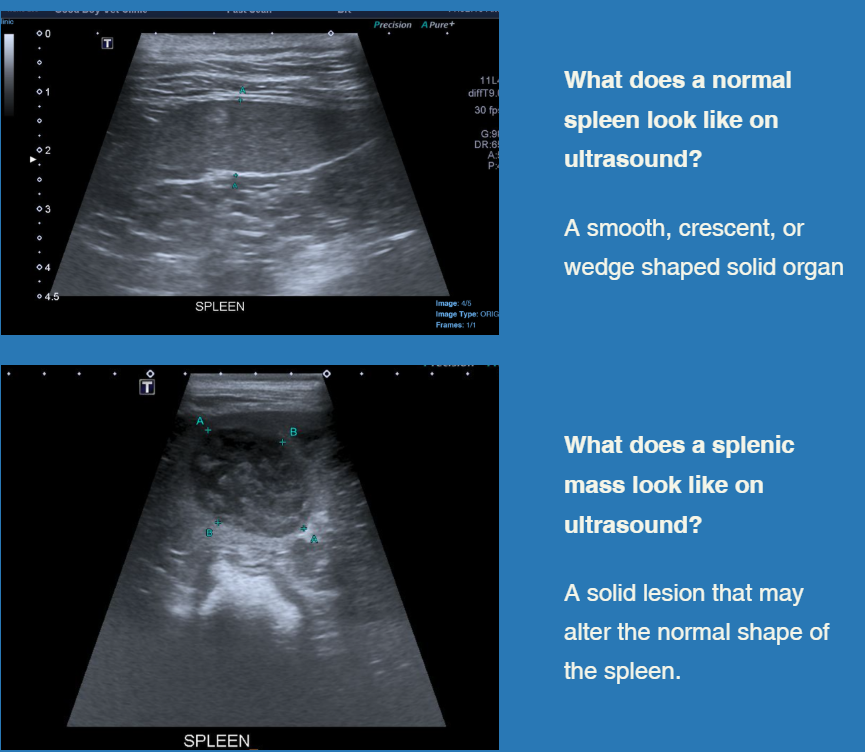
Splenic masses are often found on abdominal ultrasound incidentally, when looking for other conditions. Some dogs however will develop symptoms if the mass within their spleen starts to bleed. Severity of symptoms in these instances can vary from mild lethargy, to weakness, collapse or shock due to loss of blood into the abdomen.
When a splenic mass starts to bleed
In dogs presenting with bleeding into the abdomen from a splenic mass, there is a 3 in 4 chance that the mass will be malignant (cancerous). In dogs without blood in the abdomen, the statistics are more favourable, with about 2 in 3 being benign.
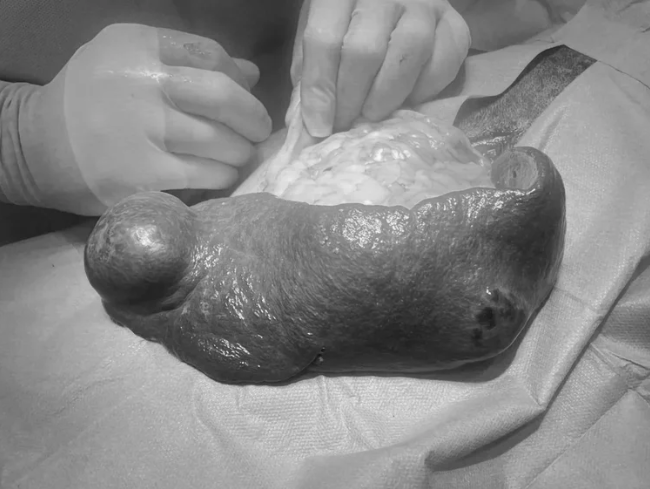
Unfortunately, there is no easy way to tell whether a splenic mass is nasty. They can only be diagnosed by biopsy, which requires surgical removal of the spleen. This means sometimes we need to take a patient to surgery when their prognosis is uncertain.
Haemangiosarcoma: the cancer we worry about
Haemangiosarcoma, an aggressive cancer of the blood vessel lining, is the most common splenic cancer seen in dogs. About 2 in 3 dogs with splenic haemangiosarcoma will have disease elsewhere in the body, with the lungs and other organs within the abdomen being most commonly affected. Unfortunately, prognosis with this type of cancer is therefore guarded, and surgery alone to remove the spleen does not cure the dog. Some other types of masses however, will be cured with surgery, with the dog expected to have a normal lifespan.
Why early detection matter
Here at Good Boy, we try to take a proactive approach to the detection of splenic masses, often performing ultrasound as a simple screening tool even in pets who show no obvious symptoms. This allows us to detect changes early, giving us more time to discuss the findings with owners and consider the best approach without the pressure of an emergency situation.