
Ear Infections
What are ear infections?
Ear irritations are one of the most common problems seen in veterinary practice, especially in dogs. This article focuses on issues affecting the external ear (otitis externa). While middle and inner ear problems do occur, they are far less common and their investigation and treatment differs greatly.
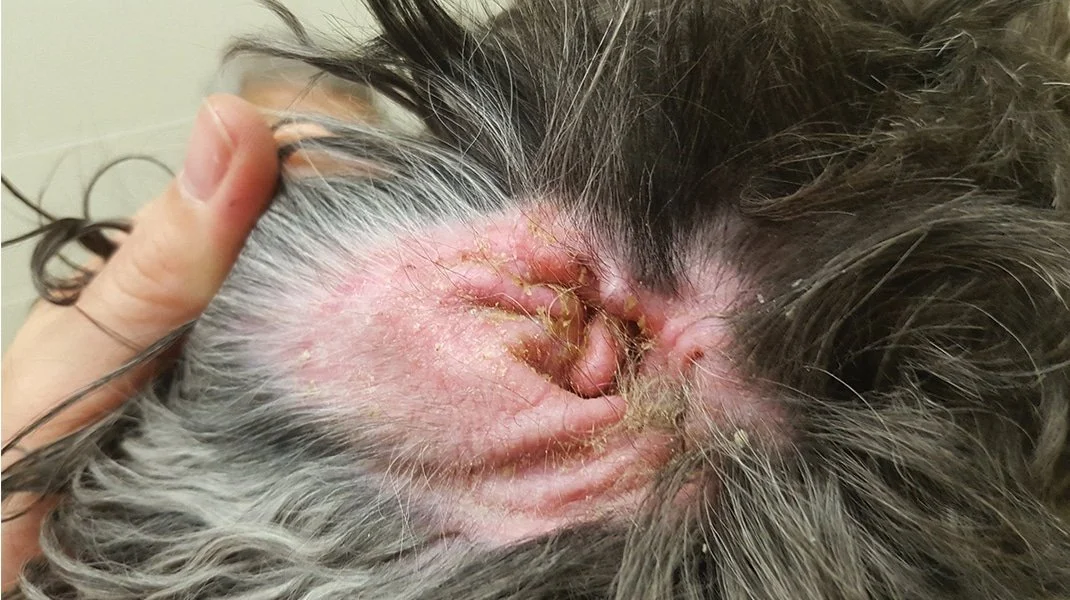
Causes
The bacteria and yeast found in infected ears are not commonly the primary issue, but rather the result of other factors that alter the ear’s normal environment and allow these organisms to overgrow.
At Good Boy Vet Clinic, the most common underlying cause we see is allergies — including environmental allergies (atopy) and food allergies. Remember, the ear lining is essentially just an extension of the skin!
Other contributing factors include:
Humid Environment
Foreign Bodies within the ear (e.g. grass seeds)
Breed-related anatomical ear changes (such as in French Bulldogs, Shar Peis and Scottish Folds)
Ear mites
Common Symptoms
Moderate to severe ear infections are often easily noticed at home. Signs may include:
Head shaking or ear scratching
Pain or sensitivity around the ear
Redness, swelling or odour
Discharge from the ear
Swelling of the ear flap (an aural haematoma) due to bursting of small blood vessels as a result of trauma
Milder cases can be trickier to detect and may only be diagnosed after your veterinarian examines an ear swab under the microscope.
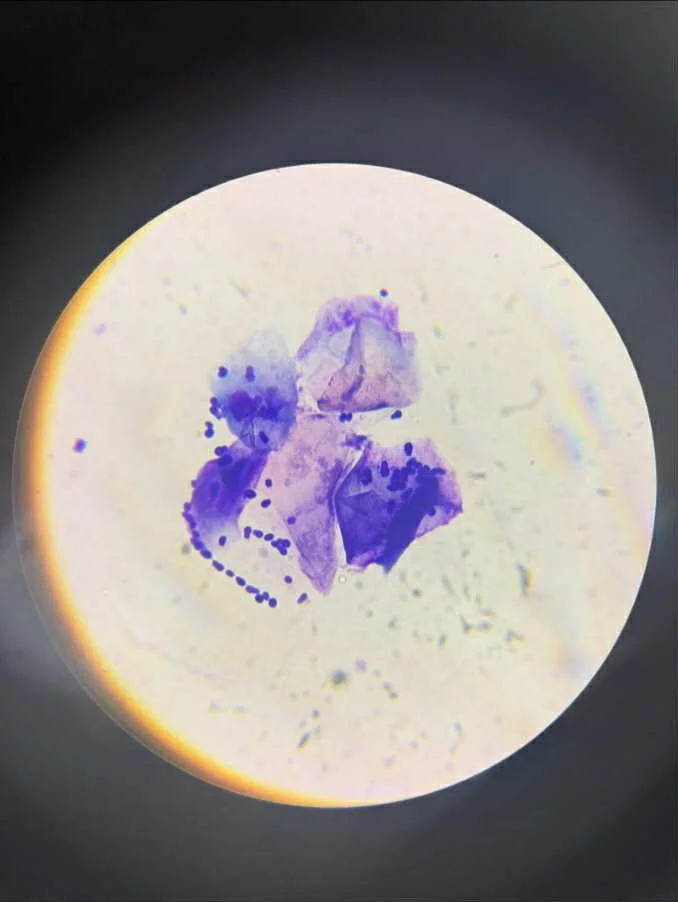
small oval shapes represent yeast cells
Skin Involvement
Dogs with ear infections often have signs of skin irritation or allergies elsewhere on the body. You may notice:
Redness or itching
Hair loss
Licking or chewing at skin
Pimples or pustules
These can indicate a broader allergic condition rather than an isolated ear issue.
Treatment
Treatment focuses on reducing inflammation and eliminating infection.
Topical medications: Drops to administer into the ear
Systemic medications: In more severe cases, oral tablets such as antibiotics, pain relief or allergy medication may be required.
Sometimes, an ear flush under sedation is necessary, particularly if:
The ear canal is full of discharge
A foreign body is suspected
The ear drum may be damaged