
Feline Oral Health
oral health conditions every cat owner should know about
Cats are the masters of disguise, especially when it comes to hiding pain. Many will continue eating normally even if their mouth hurts, meaning dental problems may go unnoticed. Conditions such as gingivostomatitis, tooth resorption and periodontal disease make regular veterinary dental checks essential for your cat’s health and wellbeing.
Gingivostomatitis
Gingivostomatitis is a chronic and painful inflammatory condition of a cat’s mouth. The exact cause isn’t fully understood but several factors are thought to contribute:
Abnormal immune responses, including reactions to the bacteria in dental plaque
Viral infections such as feline calicivirus or feline immunodeficiency virus (FIV)
Changes in the normal balance of oral bacteria
Occasionally owners notice red gums or signs of oral discomfort and seek veterinary care for their furry friend. More commonly however gingivostomatitis is detected during routine veterinary examinations
Common symptoms
Common symptoms include:
Oral pain; jaw chattering, grinding, pawing at the face, head shaking
Bad breath
Oral bleeding
Drooling
Reduced appetite and possibly weight loss
Difficulties swallowing
Poor coat condition
Behavioural changes such as hiding
Severe inflammation, swelling and ulceration of the oral tissues is present. This may occur in various locations including along the gumline or at the very back of the mouth.
Treatment
Treatment depends on the severity. In mild cases, periodic professional dental cleaning and strict home dental care may suffice. In more severe or recurrent cases control requires surgical extraction of affected teeth. Medications and other therapies may also be discussed in certain cases.
Tooth resorption
Tooth resorption, as the name suggests involves destruction of the mineralised material of the teeth. It most often starts during middle age, and is more common in purebreds.
Once again, the exact causes are not fully known. Proposed contributing factors include:
Lack of chewing
Diets low in calcium or high in magnesium
Frequent regurgitation of hariballs, leading to oral acidity
The photo
shows inflamed
gum at the
base of the
tooth
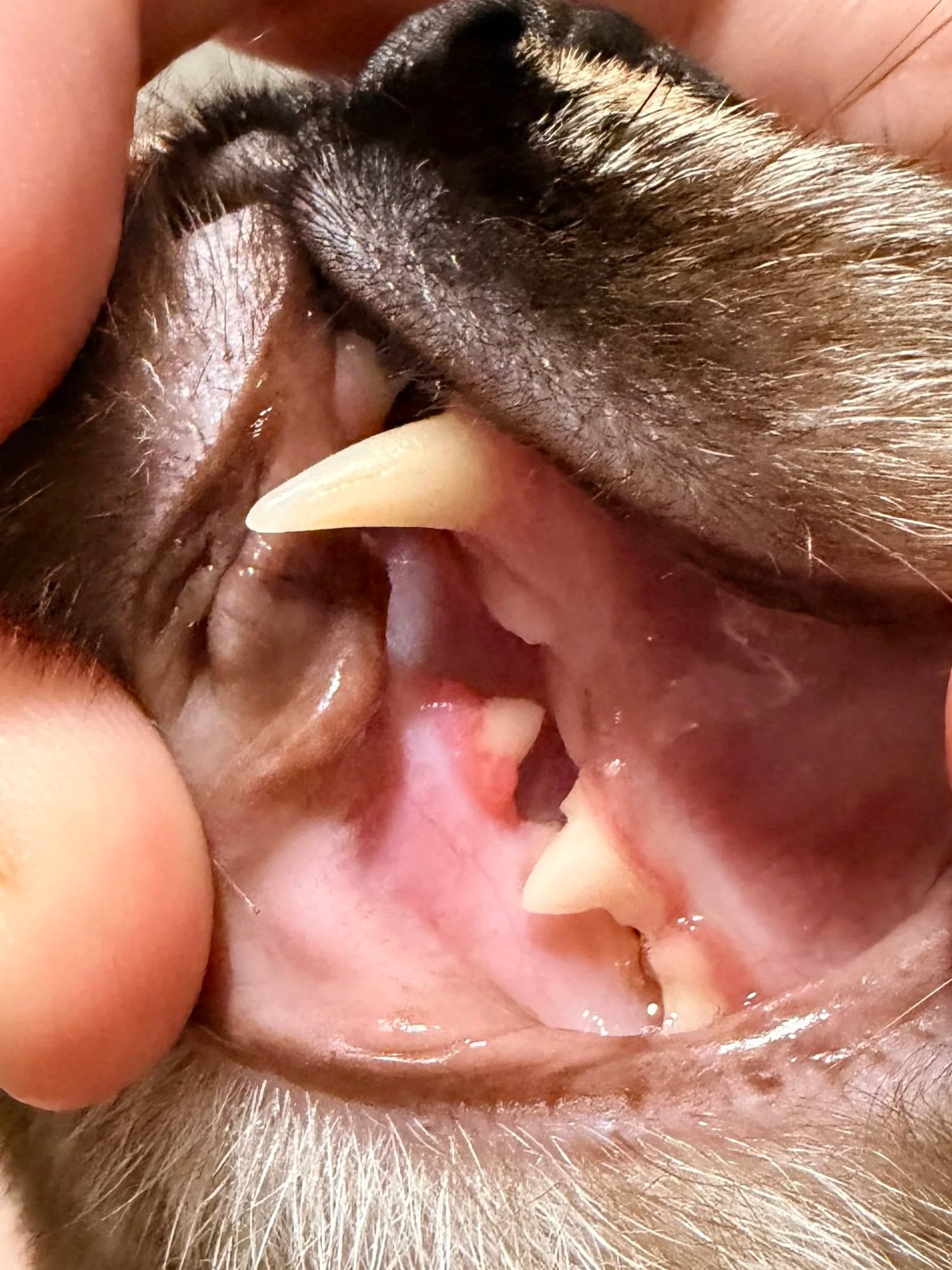
Tooth resorption happens when odontoclasts (cells normally involved in shedding of baby teeth and eruption of adult teeth) start to break down the tooth’s protective layer. This exposes the sensitive inner tissues, as well as causing weakening which may lead to the tooth breaking.
Symptoms
Many symptoms of tooth resorption are similar to those described above for gingivostomatitis. If the lesion affects the crown of the tooth it may be visible on oral examination. Those affecting the root are often only detected when a patient is under anaesthesia and/or has dental X-rays performed.
Treatment
Treatment usually involves surgical intervention. This is most often in the form of removal of the entire tooth, however select cases may be suitable for a procedure called a crown amputation. Very mildly affected teeth may be suitable for monitoring (including periodic dental X-rays) however resorption usually progresses and further treatment is often needed.
Regular dental checks are vital for all cats. Early detection can prevent pain, preserve teeth, and improve your cat’s quality of life. If you notice any signs of oral discomfort or it’s been a while since your cat’s last dental check, book a visit with our friendly team.