
Addison’s Disease
When vomiting and diarrhoea are more than just an upset stomach
Does your dog suffer from intermittent vomiting or diarrhoea? Are they sometimes off their food, lethargic or struggling to maintain their weight? Whilst these symptoms can be associated with many different illnesses, they can also indicate Addison’s disease, a condition which is often overlooked because its signs are vague and tend to come and go.
What is Addison’s Disease?
Addison’s disease, or hypoadrenocorticism, is a disorder affecting the adrenal glands, small hormone producing structures located in the abdomen near the kidneys. In most cases of Addison’s disease the adrenals are mistakenly destroyed by the immune system. Less commonly the glands may be affected by cancer, infection or trauma.
The disease results in deficiency of cortisol, an important hormone that helps the body respond to stress and regulate metabolism and immune function. In some Addison’s patients, hormones required for control of electrolyte balance are also impacted.
Addison’s disease is most commonly diagnosed in young to middle aged dogs. Some breeds are over-represented including standard poodles, rottweilers, labradors, spaniels and pomeranians. In some breeds there is a genetic predisposition. Cats are uncommonly affected.
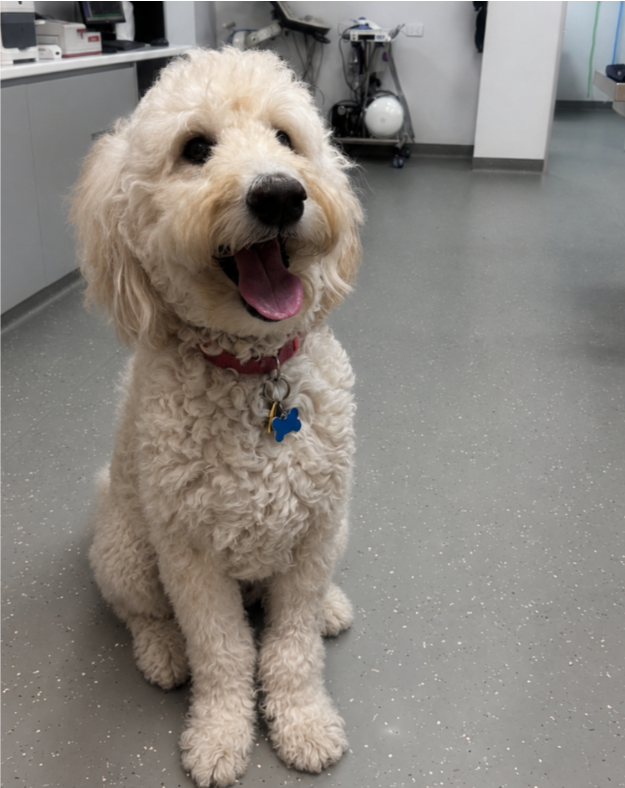
Addison’s disease is most commonly diagnosed in young to middle aged dogs. Some breeds are over-represented including standard poodles, rottweilers, labradors, spaniels and pomeranians. In some breeds there is a genetic predisposition. Cats are uncommonly affected.
What symptoms might I see?
Addison’s disease is often called “the great pretender” because its symptoms can mimic many other illnesses. Its often vague signs and tendency to wax and wane can make it difficult to recognise. Dogs may present with symptoms of gastrointestinal upset, including vomiting, diarrhoea (sometimes with blood), poor appetite, lethargy and abdominal discomfort. Some may also drink and urinate more than normal. In severe cases dogs may present in a crisis, with sudden weakness, collapse and shock.
How is Addison’s disease diagnosed?
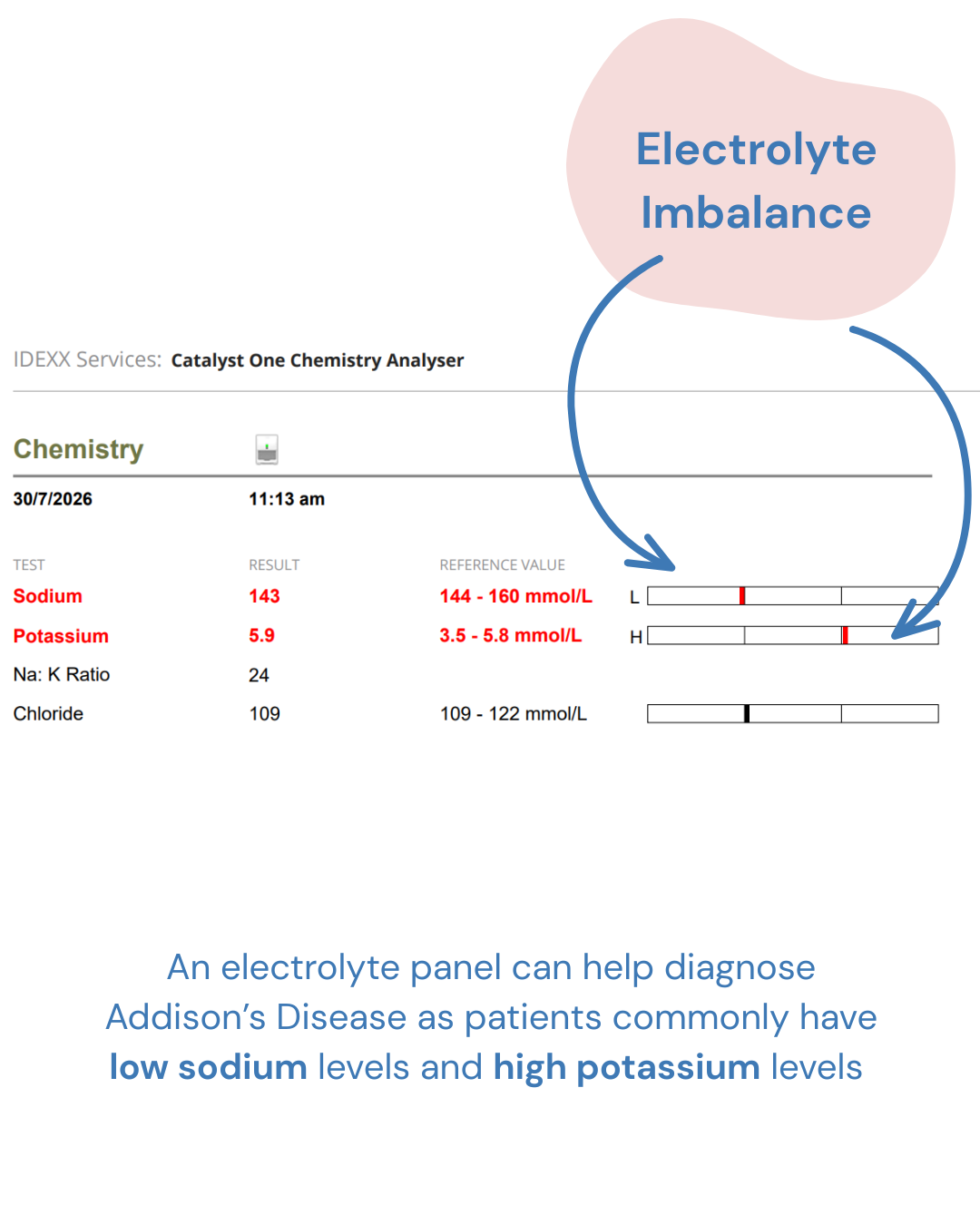
Altered white blood cell counts and changes in electrolytes and other biochemical parameters on regular blood tests may raise concern for Addison’s disease. Similarly, finding unusually small adrenal glands on imaging such as ultrasound may also raise suspicion for the condition.
Definitive diagnosis can only be made based on the results of blood cortisol levels. A resting cortisol level above a certain range rules out Addison’s disease. If cortisol levels are below this range a further test known as an ACTH stimulation test must be performed. A synthetic version of a hormone naturally produced by the dog’s brain is administered to the patient to stimulate the adrenal glands, with a second cortisol level taken 1 hour later.
How is it managed?
The severity of the pet’s illness will dictate whether in hospital treatment is needed for initial stabilisation. In patients who are only mildly unwell, medications can be commenced and the patient discharged home. Affected pets often require regular blood testing to ensure appropriate control of their electrolyte levels. There is no cure for Addison’s disease, meaning lifelong treatment is required. With appropriate management Addison’s patients are expected to have an excellent prognosis.
When should I see my veterinarian?
If your dog experiences recurrent vomiting, diarrhoea, lethargy or poor appetite, it is worth discussing Addison’s disease with your veterinarian. Although the disease is not common, early diagnosis can help prevent serious complications and improve the pet’s quality of life.